
Solar eclipse of August 2026 in Humain
On 12 August 2026, a total solar eclipse took place. While people had the chance to witness the totality of this event in Spain, Iceland and Greenland, eclipse watchers from Belgium witness the Moon covering about 90% of the Sun. On this occasion, the Royal Observatory of Belgium organised an eclipse observation event in its radioastronomy station in Humain (Marche-en-Famenne) and welcomed about 300 visitors.
In Humain, the eclipse began at 19:20, with a maximum at 20:14 and ended at 21:07, a few minutes after sunset (at 20:58). The site offers a clear view of the setting Sun, which allowed people to enjoy the eclipse from the beginning to nearly its end with eclipse glasses.
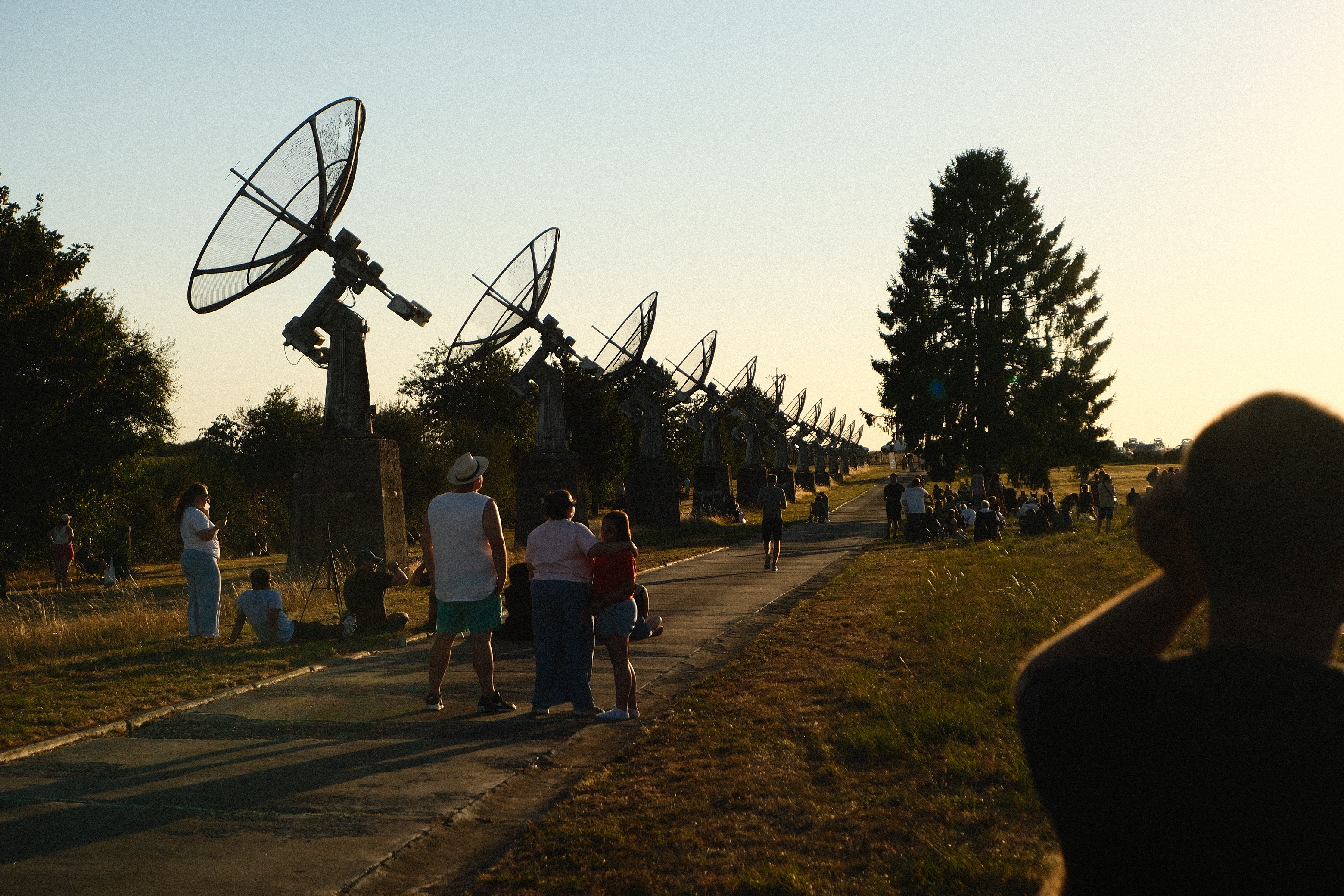
People watching the solar eclipse in Humain. Credit: ORB-KSB.
Solar telescopes were also installed for visitors to observe the eclipse in more detail, and, on the surface of a white tent, they could view the eclipse with alternative ways (by projecting sunlight through a skimmer for example).
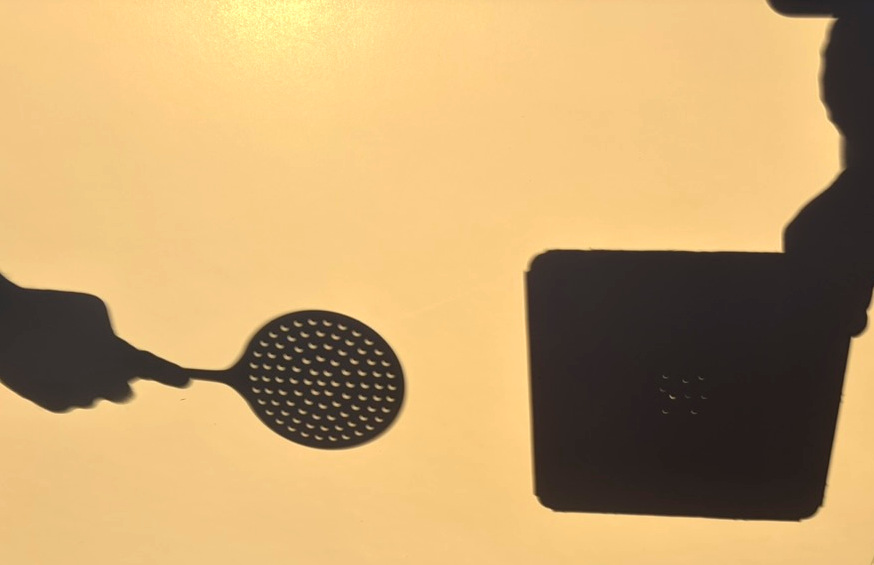
The sunlight is projected on the white tent through a skimmer and holes of a cardboard. Through the holes, one can observe the eclipsed Sun. Credit: ORB-KSB.
Beside eclipse viewing, visitors also had the occasion to learn more about solar physics and space weather research at the Observatory, discover how a seismometer works and visit a new museum about the history of the Humain radioastronomy station. After sunset, the remaining people had the occasion to see Venus with the naked eye. The event ended at 22:30, with a few lucky observers admiring the first Perseid shooting stars of the night.
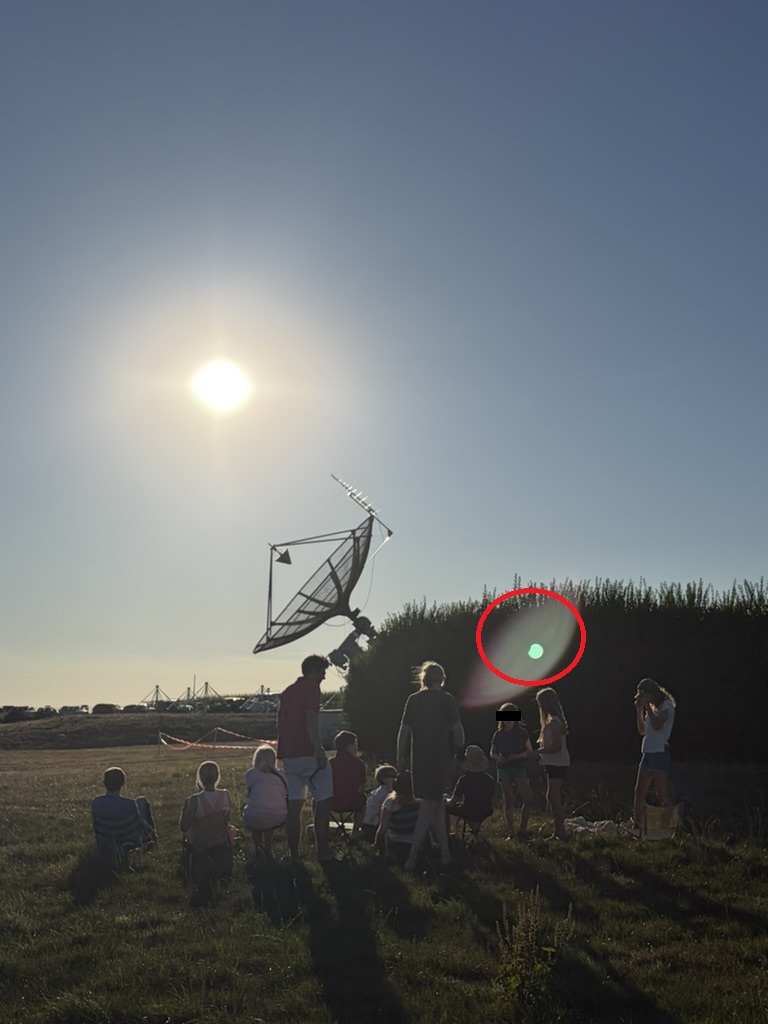
Through the artificial effect of lens flare, in which the camera lens reflects sunlight, one can catch a reflection of the eclipsed Sun, as seen in the red circle of this picture. Credit: ORB-KSB.
In Uccle and in space
In Uccle, the solar telescopes, with their advantage of being placed 12 m above the ground, had the chance to take snapshots of the eclipse. The space-based solar telescopes managed by the Observatory were also at the ready. The Proba-2 travels so fast around Earth that it crossed the Moon’s shadow multiple times allowing its instruments, SWAP and LYRA, to capture three partial eclipses in a row. The ASPIICS instrument onboard Proba-3 observed at the same time a natural total solar eclipse by the Moon and an artificial eclipse by its occulting satellite covering the solar disk. This is double eclipse will only happen once during the mission’s lifetime.
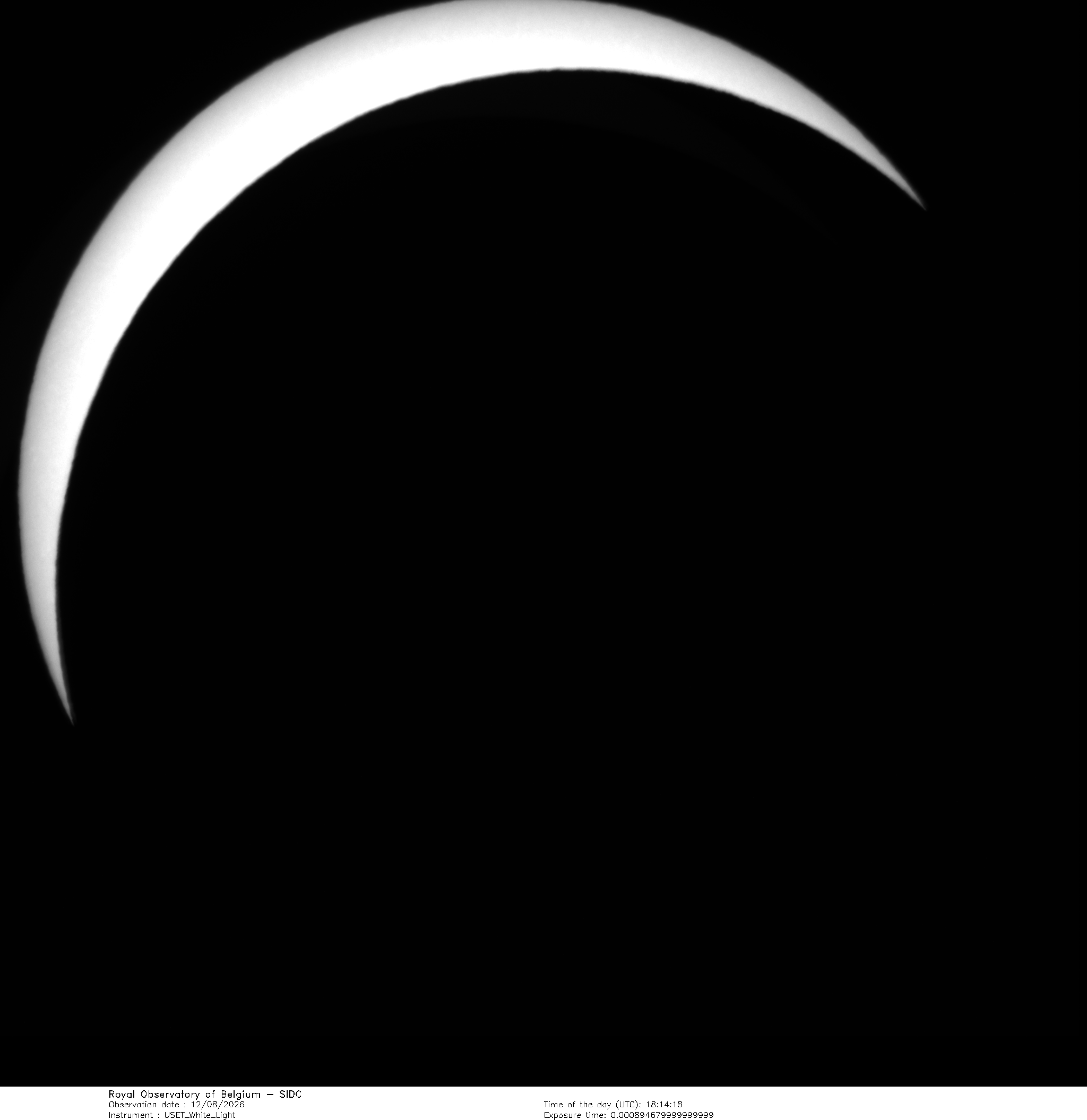
Image in visible light of the eclipsed Sun taken by one of the solar Uccle telescopes on 12 August 2026 at 20:14 near the maximum of the eclipse. Credit: ORB-KSB/USET.
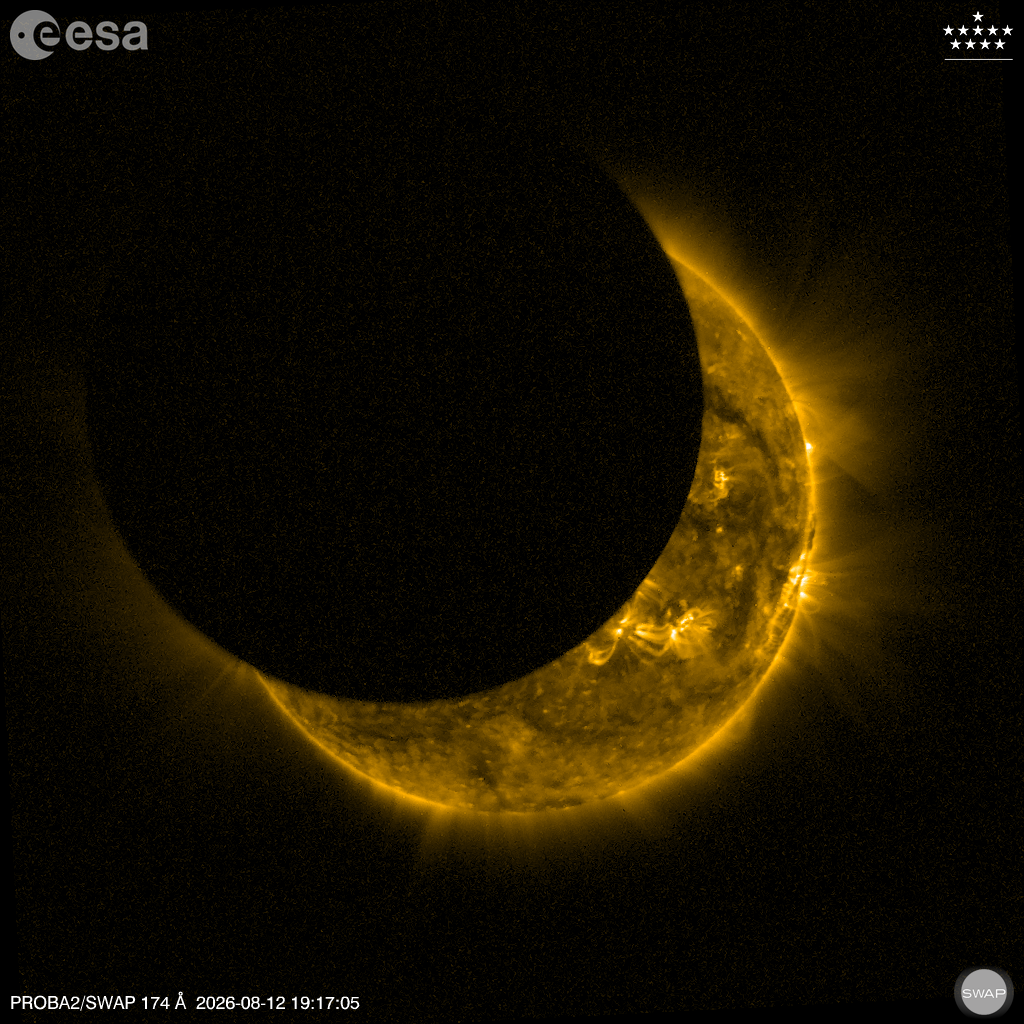
Image in extreme ultraviolet of the eclipsed Sun taken by the SWAP camera onboard Proba-2 on 12 August 2026. Credit: ESA/Proba-2/SWAP/ORB-KSB.
Solar eclipses take place two to three times a year, some of which are total solar eclipses. However, each of these events is only visible from a small region on Earth and the zone where the totality can be observed is even smaller.
Fortunately, the next total solar eclipse that will be partially visible in Belgium is not far away: it will take place next year, on 2 August 2027, with the totality visible in North-Africa and the south of Spain. In Belgium, the Moon will cover a bit less than half of the surface of the Sun. Precise times of the solar and lunar eclipses in Belgium in 2027 will soon be published on the Information website of the Observatory.
Stay tuned and don’t put your eclipse glasses too far away!